Learn English w/ Grammar Games
GamiakEducational
4.310.00 Reviews
- Version
- 2.1
- Installs
- 50.00K
- Age Rating
- Everyone
Screenshots
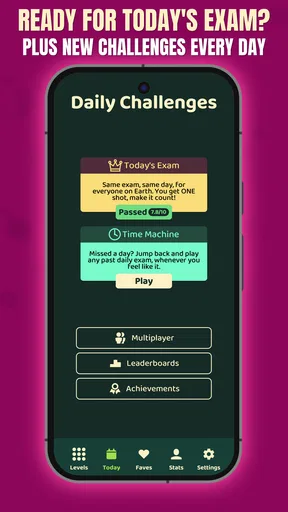
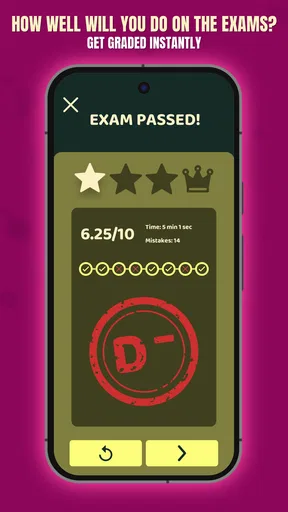
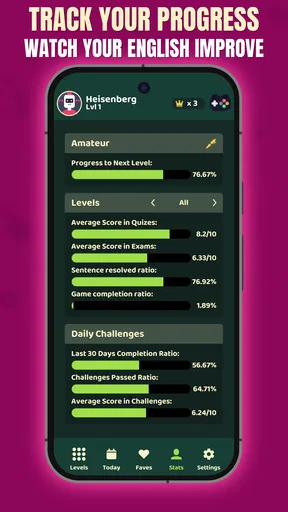
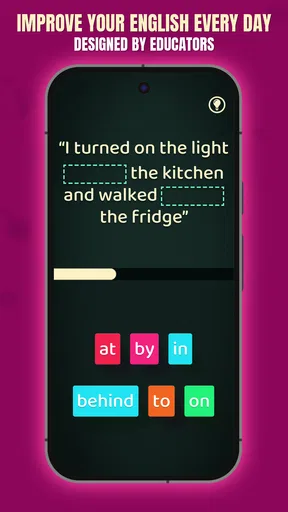
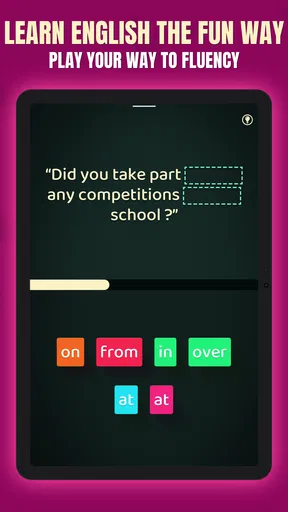
Our Review of Learn English w/ Grammar Games
 Analysis by Appyee
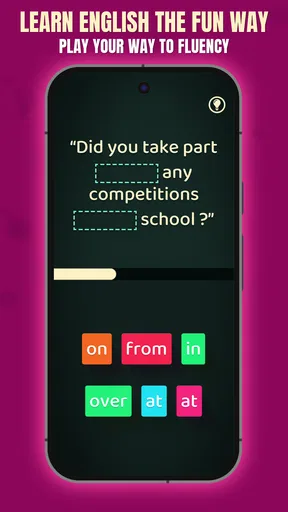
Learning grammar usually becomes difficult at the exact moment it stops feeling connected to real sentences. That is why I found Learn English w/ Grammar Games more useful than its very short store description suggests. It is an educational game from Gamiak that asks me to place prepositions correctly and build English sentences through grammar-focused play. The idea is simple, but it gives me a practical way to notice how small words change meaning.
I approached it less like a full English course and more like a compact practice tool. That distinction matters. I would not use it as my only resource for speaking, listening, pronunciation, or vocabulary growth. I would use it when I already know some English and want repeated, focused practice with sentence structure. For that purpose, it has a clear identity instead of trying to cover everything.
What the purchase gives you and who it suits
The game costs $6.49, so I think the purchase deserves a little more thought than a free download that can be casually deleted. Its content rating is Everyone, which makes it suitable for a broad audience, including learners who prefer a gentle educational format. The app was released on Aug 5, 2017, and its current version is 2.1, so I see it as an established, focused learning product rather than a constantly changing language platform.
That price makes the most sense for someone who wants a dedicated grammar exercise and dislikes advertising-heavy study sessions or complicated course menus. If I only needed occasional help with one homework question, paying for a complete game may feel unnecessary. If I expected a large modern language platform with lessons in many skills, conversation practice, progress analytics, and a broad curriculum, I would also look elsewhere before spending money.
The public response is encouraging without being overwhelming: the game holds a 4.3 average from around 475 ratings, with 50K+ installs. I read that as evidence that the basic approach works for a meaningful group of learners, not as proof that it will match every learning style. Its audience is specific. It is best for people who learn by doing, correcting, and trying again rather than by reading long grammar explanations.
One practical question is device compatibility. The listed minimum operating system is Android 7.0, so I would check that before purchasing, especially if I were installing it on an older phone or tablet. The developer is Gamiak, and the app’s identity remains centered on English grammar games rather than a broad collection of unrelated educational subjects.
Why prepositions make a useful target
Prepositions are small, but they cause a surprising amount of trouble. Learners may understand the main nouns and verbs in a sentence while still choosing the wrong word for time, place, direction, or relationships between objects. A sentence-building game gives me a better kind of repetition than simply memorizing a rule: I have to decide what belongs in the sentence and see whether the complete result makes sense.
The strongest use case I found is the short correction session. I can open the game when I have a few spare minutes, work through sentence choices, and focus on the error instead of drifting through a large lesson library. That makes it practical before writing an email, reviewing schoolwork, or refreshing English after a long break.
There is also a useful difference between recognizing an explanation and producing an answer. I might understand a grammar rule when I read it, then hesitate when I need to use it. Putting the preposition into place exposes that gap. In my view, this is where the game format earns its place: it turns passive recognition into a small decision.
A realistic daily routine
Imagine a learner who works in an international office and often writes short messages in English. At lunch, that person could complete a few grammar exercises, then write two original sentences using the same pattern. The game would provide the controlled practice, while the personal sentences would test whether the idea transfers outside the screen. I would recommend this two-step routine because completing a level alone can create a feeling of progress without proving that the grammar appears naturally in writing.
For a student, the same routine could fit before homework rather than replacing it. I would first play through a small set, note the prepositions that caused hesitation, and then look for those relationships in a textbook paragraph or class assignment. This turns mistakes into a review list. The useful insight is not merely which answer was wrong, but whether the error came from time, location, movement, or a phrase that must be learned as a unit.
Progress without unnecessary pressure
Games can make repetition easier, but they can also encourage rushing. When I see a grammar exercise as a challenge to finish, I may remember the correct position without understanding why it belongs there. My advice is to slow down after every mistake and say the complete sentence aloud. Even though this is not a speaking course, hearing the sentence helps connect the written choice with natural rhythm and meaning.
I would also avoid treating a perfect run as the main goal. A wrong answer is valuable when I can explain the correction in my own words. For example, I might ask myself whether the sentence describes a fixed time, a destination, or a position. That small pause turns the game from an answer-tapping exercise into deliberate practice.
Another helpful workflow is to keep a personal “confusing pairs” note outside the app. Whenever I repeatedly mix up two prepositions, I would write one example for each and return to the game later. This is more effective than replaying everything equally, because it concentrates effort where my English actually breaks down. The app supplies the practice; I supply the memory system.
The trade-off is that a focused game may feel repetitive to an advanced learner. Someone who already uses English comfortably may not gain much from basic placement practice unless they are correcting a specific recurring problem. Conversely, a beginner with almost no vocabulary may struggle because grammar decisions are hard when the surrounding sentence is unfamiliar. I see the best fit as an elementary or intermediate learner who can understand enough of the sentence to think about its structure.
How it compares with ordinary alternatives
A grammar book is better when I need a detailed explanation, exceptions, examples in context, and a reference I can revisit. A teacher is better when I cannot identify why my answer is wrong or when I need feedback on original writing. A general language app may be better for building vocabulary, listening habits, pronunciation, and conversation confidence. This game is narrower, but that narrowness can be its advantage when I want concentrated sentence practice.
Free online exercises may offer similar question types, so the purchase is not automatically the best financial choice for everyone. I would choose this app over scattered web practice when I value a self-contained game experience and want grammar work to feel more consistent. I would choose free resources instead if I only need a few examples or if I prefer reading explanations before answering.
The important comparison is not “game versus serious learning.” A well-used game can support serious learning, but it cannot replace every part of it. I would pair this one with reading and writing rather than expecting it to create fluent English by itself. That expectation would be unfair to a product designed around grammar games.
Fairness, competition, and spending
From a fairness perspective, the purchase model is straightforward in the information available to me: the game is listed at $6.49. I do not see a reason to treat it like a competitive title where spending might create an advantage over other players. Its purpose is personal learning, so the relevant question is whether the practice is worth the one-time cost for my needs, not whether another learner can buy a stronger position.
I would still make the decision based on usage. If I expect to open it regularly for targeted grammar review, the price is easier to justify. If I tend to abandon educational apps after one session, a free sample or another resource may be a safer choice. The game’s value comes from returning to difficult sentence patterns, not from merely owning it.
There is no competitive pressure that I would use as a reason to buy. I would not purchase it to chase rankings, impress other learners, or keep up with a community. I would purchase it for quiet, individual practice. That makes it a better fit for people who find public performance distracting and a weaker fit for learners who need social accountability to stay consistent.
My spending advice is simple: decide what grammar problem you want to work on before paying. If the answer is “prepositions and sentence construction,” this is a sensible match. If the answer is “I want to speak naturally with other people,” I would spend the same budget on a resource that directly supports conversation or guided feedback instead.
What I would check before committing
The age rating and minimum operating system answer two practical questions: the content is rated Everyone, and the app requires Android 7.0 or later. I would verify those details against the device I plan to use before buying. I would also remember that the listed version is 2.1, so anyone expecting the pace of a frequently refreshed subscription service should set a different expectation.
The bigger unknown for me is personal fit. A store summary cannot tell me whether the sentence difficulty will feel appropriately challenging, whether the exercise rhythm will suit my attention span, or whether I prefer this format to written drills. Those are not flaws in the product; they are reasons to think about my learning habits first.
I would also avoid assuming that a high score in the game means I have mastered the grammar in real life. The strongest test is transfer. After practicing, I would write a short message, describe a room, or explain a schedule without looking at the exercise. If the same prepositions appear correctly in that independent task, the practice is doing something useful.
For parents or teachers, I would frame the app as a supplement rather than a complete curriculum. Its Everyone rating makes it approachable, but an adult should still help a young learner connect game answers to meaningful sentences. Asking “Why does that word fit here?” is more valuable than simply celebrating speed.
My trust verdict after using it
Learn English w/ Grammar Games has a clear purpose, and I appreciate that it does not need to pretend to be an entire language school. Gamiak focuses the experience on sentence construction and preposition practice, which gives the game a useful role in a larger study routine. I can imagine recommending it to a friend who understands basic English but keeps making small grammar mistakes in writing.
I would not recommend it as the only app for a complete beginner, an advanced learner seeking sophisticated usage, or anyone primarily looking for conversation and pronunciation work. Those learners need different tools. I would also hesitate if the $6.49 purchase felt high for an app I might use only once, because the benefit depends strongly on repeated practice.
For the right learner, though, the focused design is the reason to consider it. I can use a short session to identify weak prepositions, slow down over sentence meaning, and then transfer the pattern into my own writing. That is a modest goal, but a realistic one. My final view is positive: it is a specialized educational game worth considering when grammar accuracy is the problem I actually want to solve, provided I treat it as practice rather than a complete English education.
Verdict
Strengths of Learn English w/ Grammar Games
- Short grammar games make practice feel less repetitive.
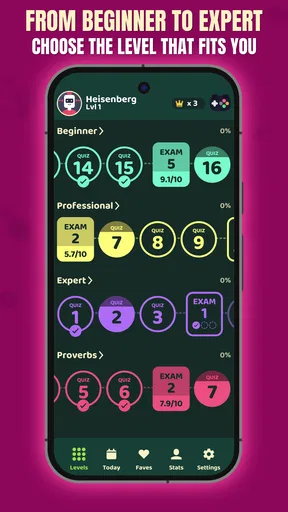
- Covers common English rules for beginners and intermediate learners.
- Quick exercises fit easily into short daily study sessions.
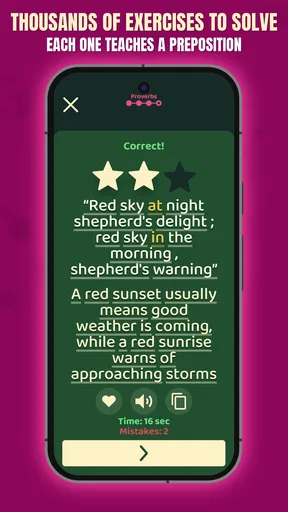
- Immediate feedback helps identify mistakes while practicing.
- Useful for learners who prefer interactive study over textbooks.
Limitations of Learn English w/ Grammar Games
- Advanced learners may find the grammar content too basic.
- Some exercises can become repetitive after extended use.
- Game-based practice may not explain difficult rules in enough depth.
- Progress can depend more on repetition than real conversation practice.
- An internet connection may be required for some app features.
Similar Picks in This Category
View All
Little Panda Policeman
BabyBus4.0

Monster Trucks Game for Kids 2
Raz Games4.1

Little Panda's Chinese Recipes
BabyBus4.4

Little Panda's Restaurant
BabyBus4.4

Little Panda's Ice Cream Games
BabyBus4.3

Baby Panda Care
BabyBus3.8
Frequently Asked Questions
What is Learn English w/ Grammar Games?
Learn English w/ Grammar Games is an educational app designed to help users improve their English grammar through short lessons, quizzes, and game-style exercises. Instead of relying only on explanations, it encourages practice with interactive questions covering areas such as verb tenses, articles, prepositions, sentence structure, and vocabulary. It may be useful for beginners and intermediate learners who want a more engaging way to study regularly.
Who can benefit from Learn English w/ Grammar Games?
The app is suitable for students, travelers, casual learners, and anyone who wants to strengthen their English grammar at their own pace. Beginners can use it to review fundamental rules, while intermediate users may find the quizzes helpful for identifying recurring mistakes. However, it should be considered a practice tool rather than a complete English course, since advanced learners may need additional resources for speaking, listening, and writing development.
How does the game-based learning system work?
Learn English w/ Grammar Games generally presents grammar practice in the form of challenges, multiple-choice questions, or quick exercises. Correct answers can help users progress, while mistakes provide an opportunity to review the relevant rule and try again. The game-like format makes study sessions feel less repetitive, although the exact difficulty and variety may depend on the selected topic, level, or lesson available in the app.
Does Learn English w/ Grammar Games work offline?
Offline availability can depend on the version of the app and the content that has already been loaded on the device. Some basic exercises may remain accessible without an internet connection, but features such as advertisements, synchronization, updates, or additional lessons may require online access. Before relying on it for travel or study without Wi-Fi, users should test the app in airplane mode and check its current store description.
Is Learn English w/ Grammar Games free to download?
The app may be available as a free download, but users should review the store listing carefully because free apps can include advertisements, optional purchases, or premium content. Certain lessons, levels, or extra features may be restricted unless users upgrade. It is also important to check the app’s privacy information, requested permissions, and subscription terms before confirming any payment or enabling recurring billing.
Play our best games!


